

Digital Marketing Strategy for Architects and Designers
Exceptional design deserves stronger market recognition.
Prospective clients decide long before they make contact. Effective digital marketing strategy helps them discover, understand, trust and confidently evaluate your expertise during that decision.
That begins with Digital Authority Architecture.
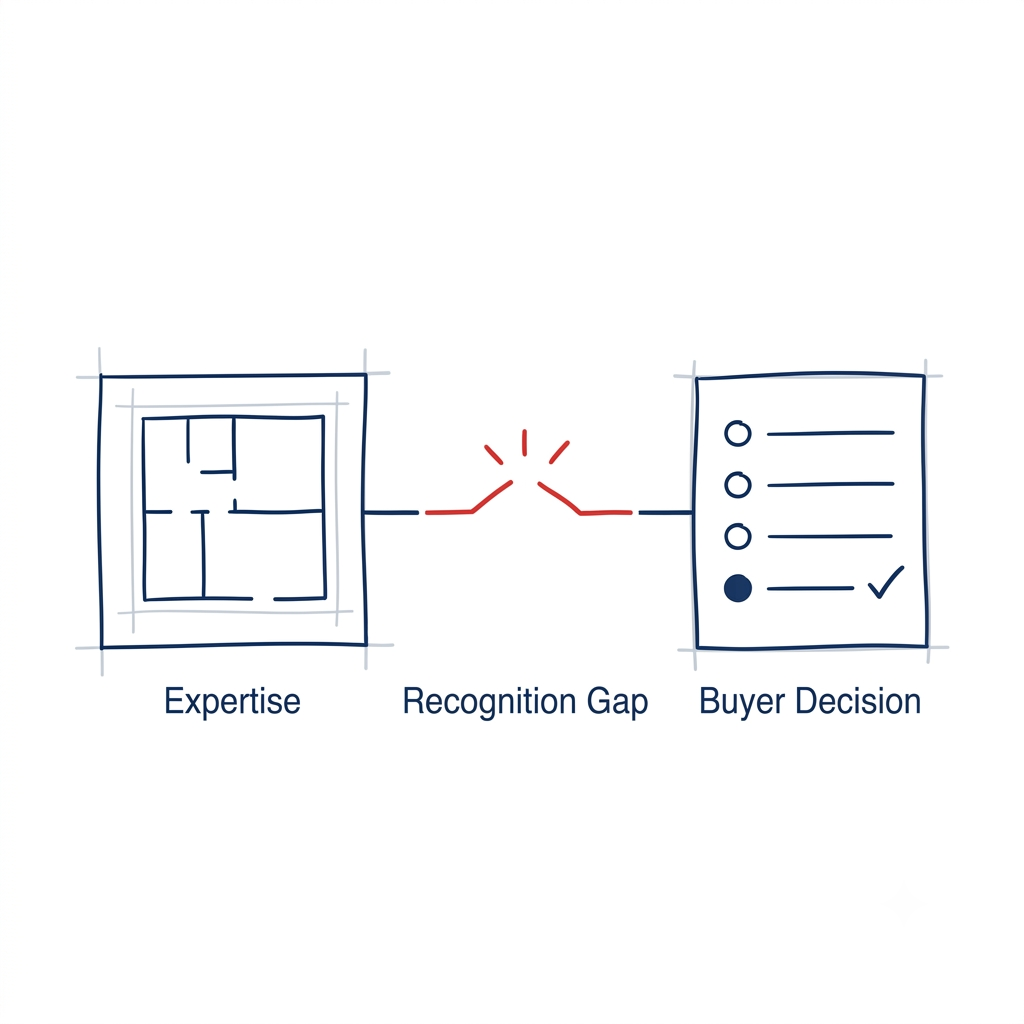
What We Consistently Observe Across Architecture Practices
Across architecture and interior design practices, the same buyer behavior appears repeatedly: Projects differ — Clients differ — Budgets differ. Yet prospective clients evaluate practices in remarkably similar ways before making contact.
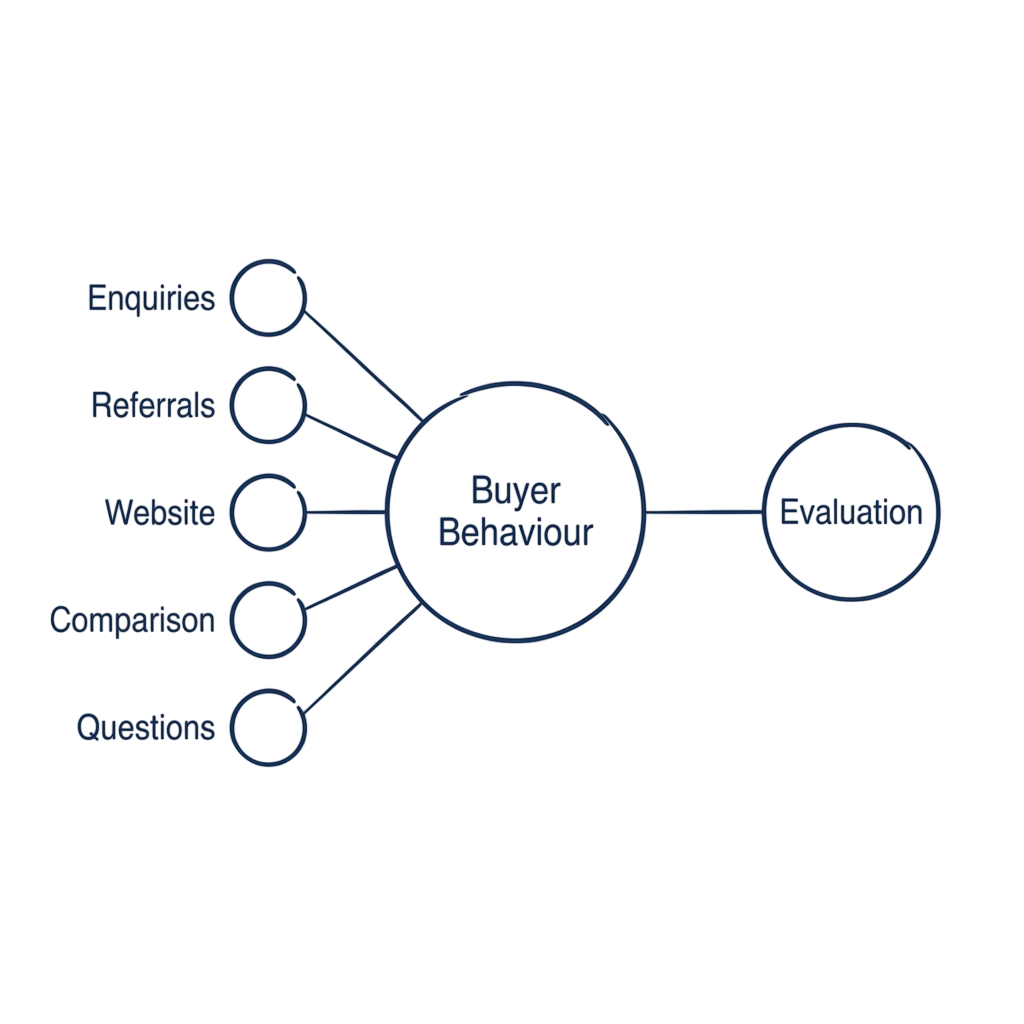
- Enquiry levels fluctuate despite a consistent standard of work.
- Referrals continue to generate projects but are difficult to predict.
- The website attracts visitors, yet relatively few become qualified enquiries.
- Prospective clients spend time comparing practices before making contact.
- Initial conversations often focus on questions that could have been answered earlier in the buying journey.
These observations rarely explain the problem, they indicate where investigation should begin.
How Prospective Clients Choose an Architect
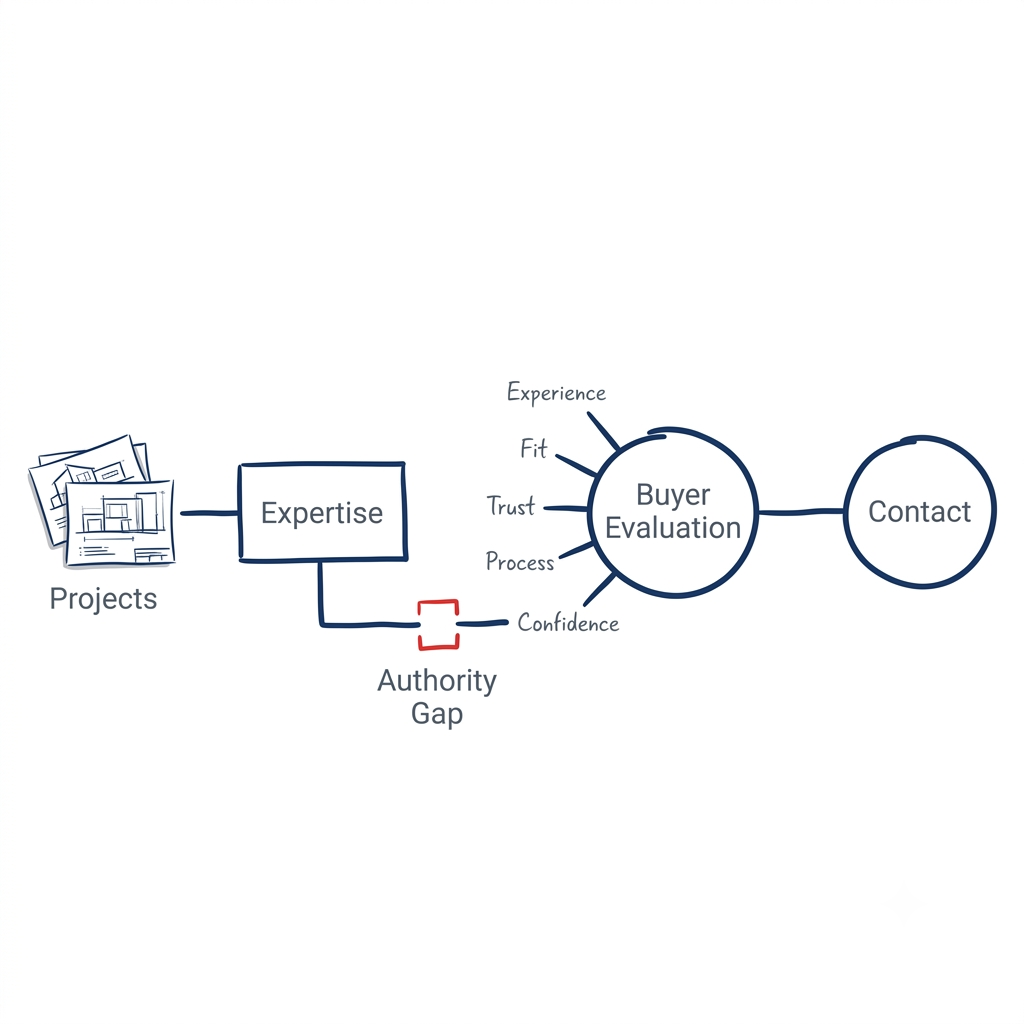
Referrals begin with trust whereas independent buyers begin with questions. Before contacting a practice, they quietly compare firms, evaluate experience and decide which ones deserve further consideration. Their decision rarely depends on one project.
It depends on the confidence they develop while evaluating the practice.
During that evaluation they quietly ask:
- Is this practice experienced with projects like mine?
- Will they understand my priorities?
- Can I trust them with a significant investment?
- What will working together actually feel like?
- Why does this practice feel more suitable than another?
A portfolio demonstrates capability, digital authority helps buyers recognize it.
“Within six months, we were getting more enquiries—and better ones. Clients were already understanding what we do before contacting us.”
— Ar. Ananth, Ashwin Architects
Where Buyer Confidence Is Built
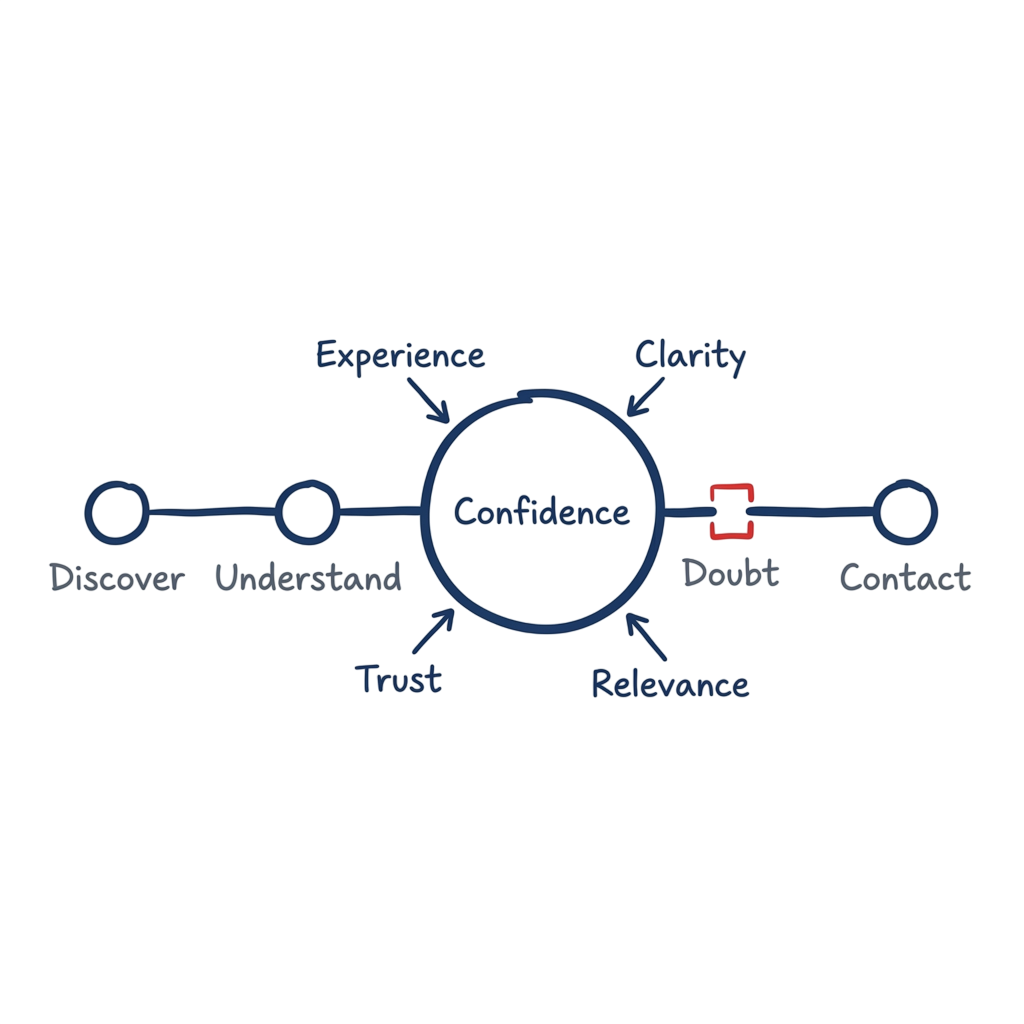
Most prospective clients do not contact the first architect they discover. They compare, they remove, they shortlist — And those decisions usually happen before any conversation begins.
Most decision-makers follow a similar sequence:
- Discover
- Understand
- Trust
- Compare
- Contact
Confidence grows—or weakens—at every stage of this journey.
Where Digital Authority Breaks Down
Similar business symptoms often have different underlying authority gaps. Identifying the right one is what determines where improvement should begin.
Discovery Gap
Relevant clients are actively researching practices, but yours rarely reaches the shortlist.
Prospective clients review your work but remain unsure whether you’re the right fit.
Buyers appreciate the work but hesitate before making contact.
Decision Gap
Buyers show genuine interest but leave before taking the next step.
Buyer Progression Gap
Enquiries begin well but lose momentum before meaningful discussions develop.
Commercial Gap
Qualified opportunities reach proposal stage but too few become confirmed projects.
The objective is not to improve everything, it is to identify the authority gap currently limiting buyer confidence. Only then can meaningful decisions be made about what should change—and what should remain exactly as it is.
Common Business Patterns
These observations indicate where investigation usually begins.
| Observed Business Pattern | Usually Suggests |
|---|---|
| Heavy dependence on referrals | Visibility is usually investigated first. |
| Strong portfolio but inconsistent enquiries | Trust and buyer confidence are investigated first. |
| Long qualification conversations | Message Clarity is usually investigated first. |
| Price comparisons early in discussions | Trust and Revenue are usually investigated together. |
| High website traffic but few enquiries | Conversion Flow is usually investigated first. |
| Qualified enquiries slowing before appointment | The Follow-up process is usually investigated first. |
No single observation identifies the authority gap — The Strategic Diagnosis examines how these patterns connect before determining what deserves attention first.
Strategic Diagnosis for Architecture Practices
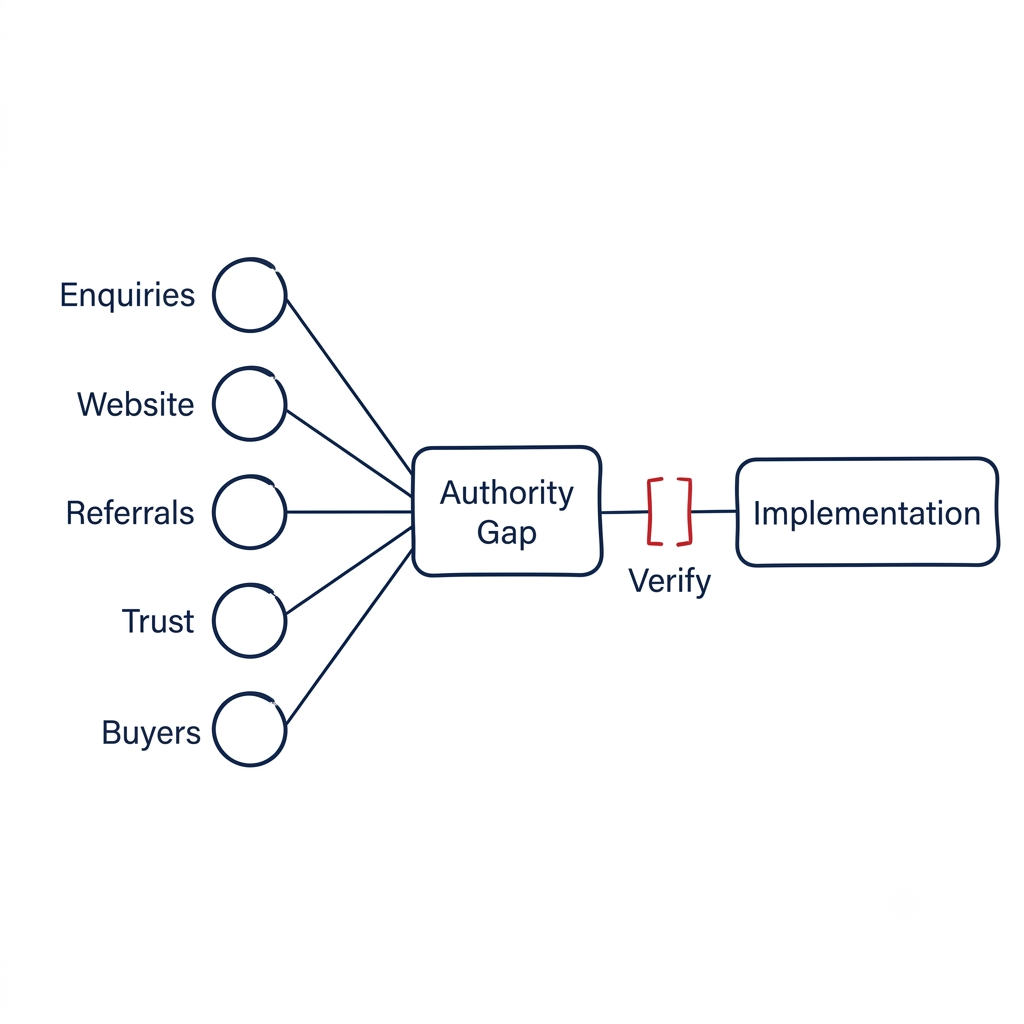
A Strategic Diagnosis identifies where buyer confidence weakens, what evidence supports it and which authority gap should be addressed before implementation.
You’ll understand:
- where buyer confidence weakens
- what evidence supports it
- which authority gap exists
- what is already working well
- what does not need changing
Implementation decisions follow the diagnosis. If no meaningful authority gap is identified, no unnecessary recommendations are made.
FAQs
Yes. Many established practices rely heavily on referrals. The diagnosis determines whether referrals are the limitation—or whether independent prospects are failing to progress.
Only if the diagnosis indicates they are likely to address the primary authority gap. Some businesses need greater visibility. Others need prospects to progress more confidently. The diagnosis determines which comes first.
Yes. Not every review uncovers a meaningful authority gap. If the current buyer journey is functioning as expected, that conclusion is communicated clearly. The objective is to improve decision quality—not to create unnecessary work.
Because visible symptoms do not always reveal the underlying authority gap. Two architecture practices may experience the same problem—such as inconsistent enquiries—for entirely different reasons. Recommending solutions before identifying the constraint increases the likelihood of solving the wrong problem. The diagnosis exists to reduce that risk.
Before Investing Further
Every architecture practice can improve, the better question is what deserves attention first. Understand what is limiting buyer confidence before deciding what should change.
Not sure where to begin? 👉 Start the 7-Min Self Audit